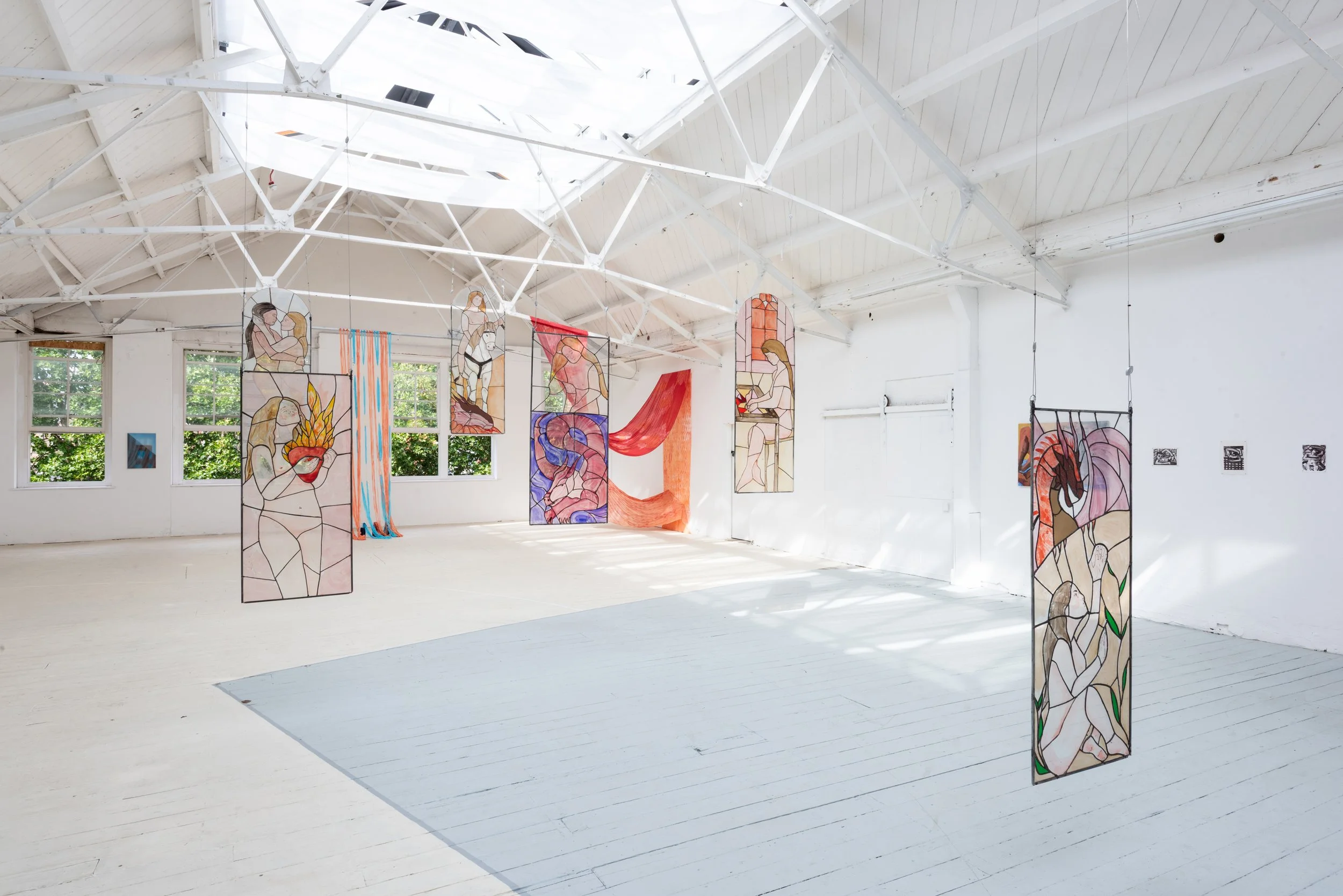
Ascension Day
The Florence Trust, End of Residency Show, Britannia Row, July 2026
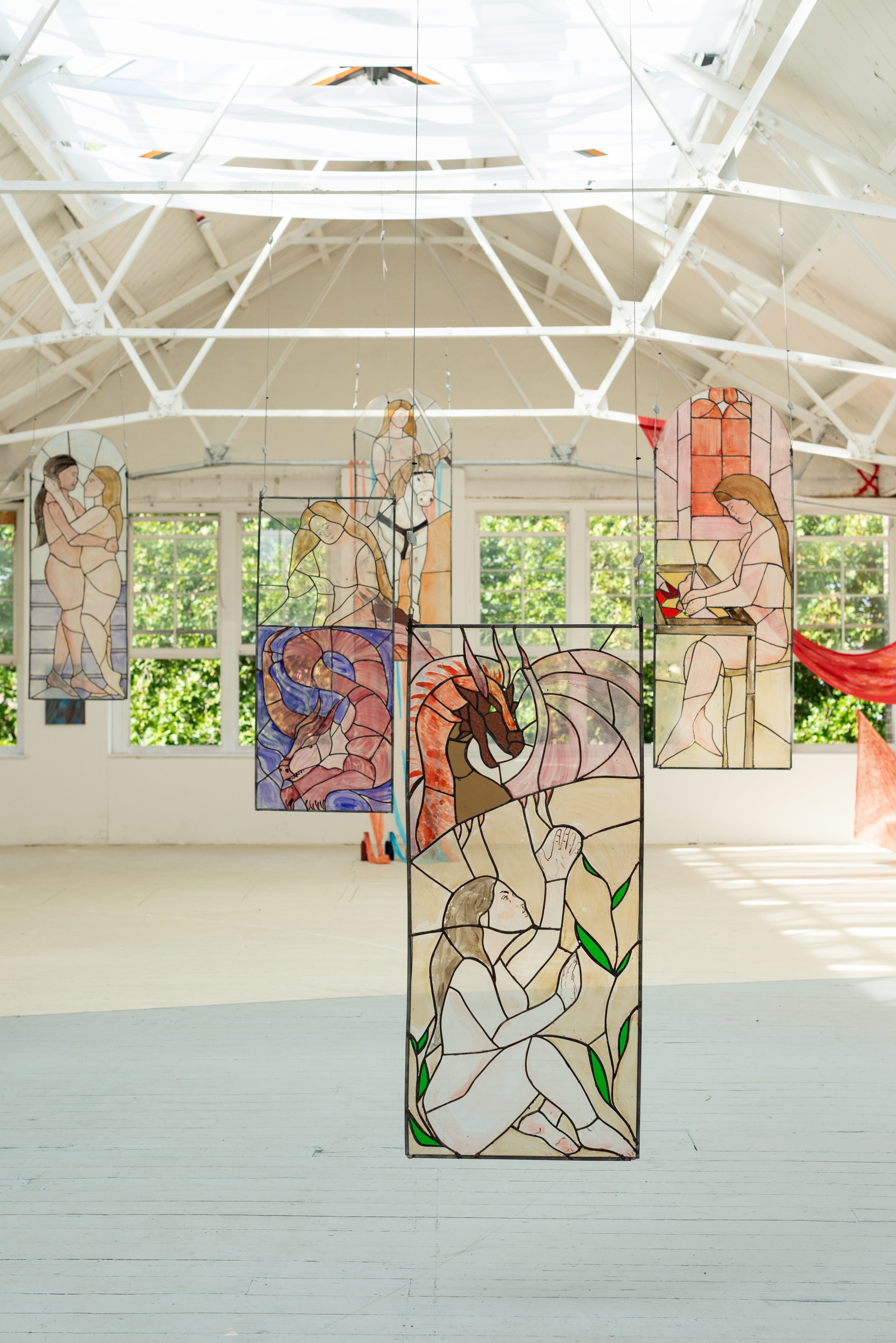
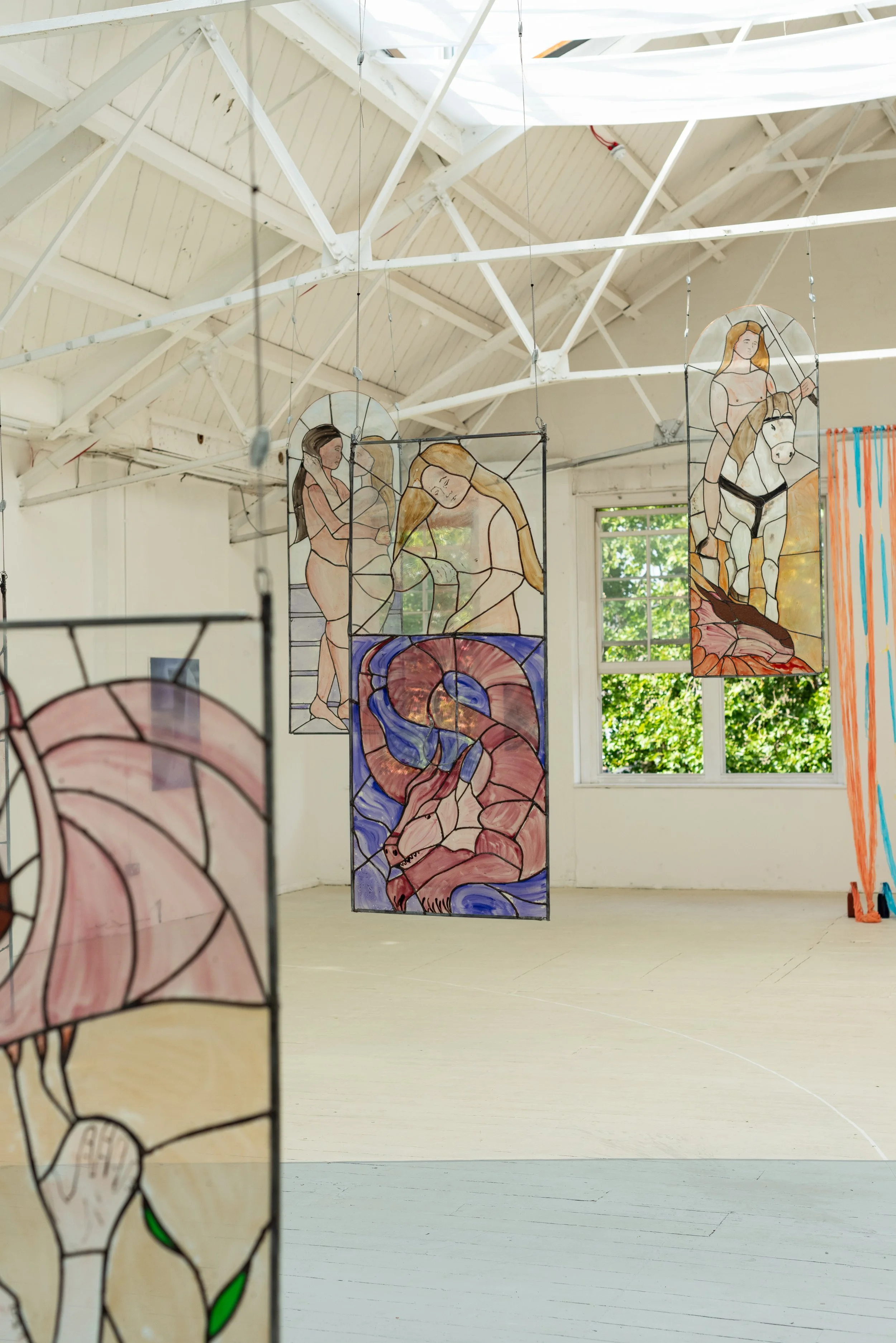
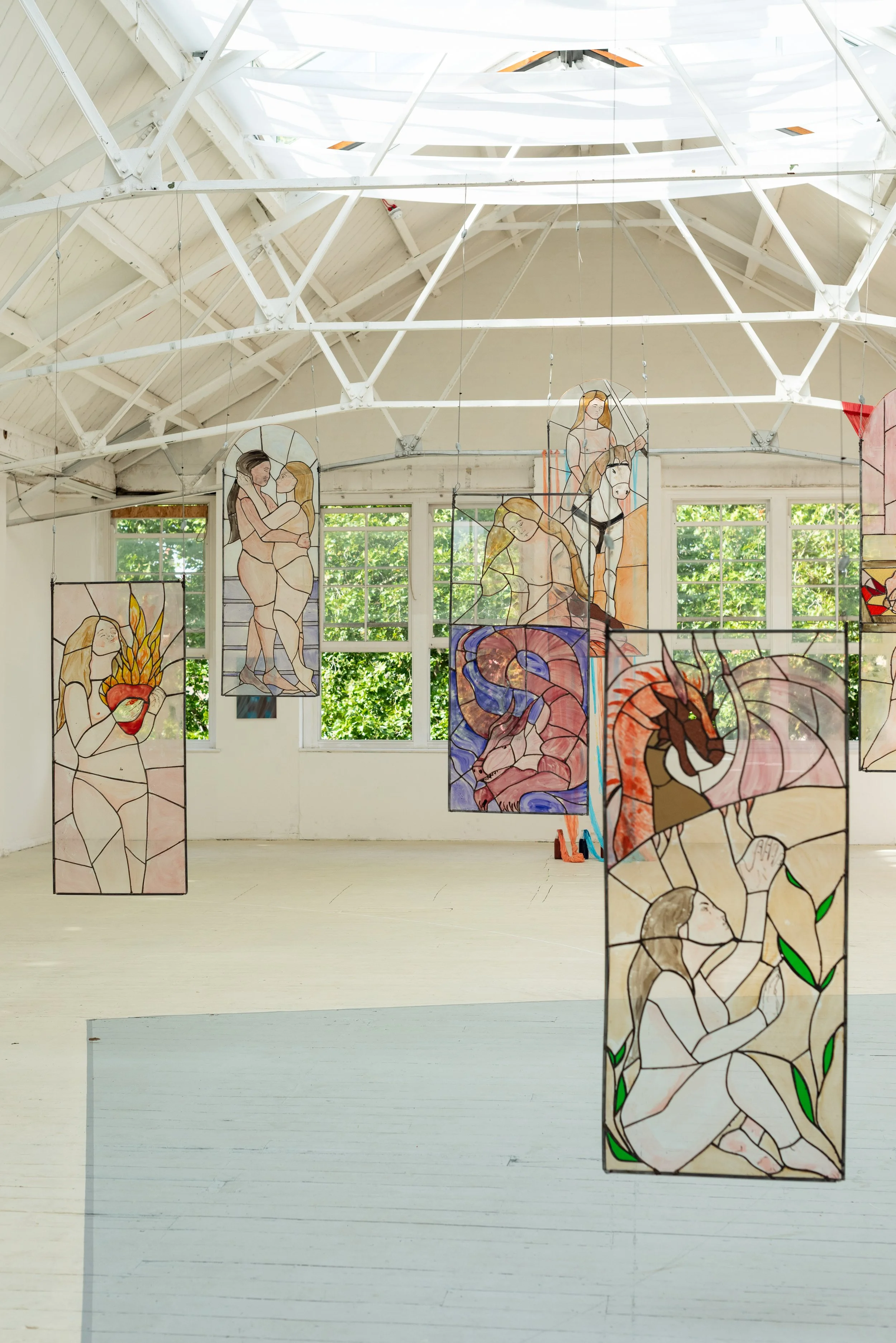
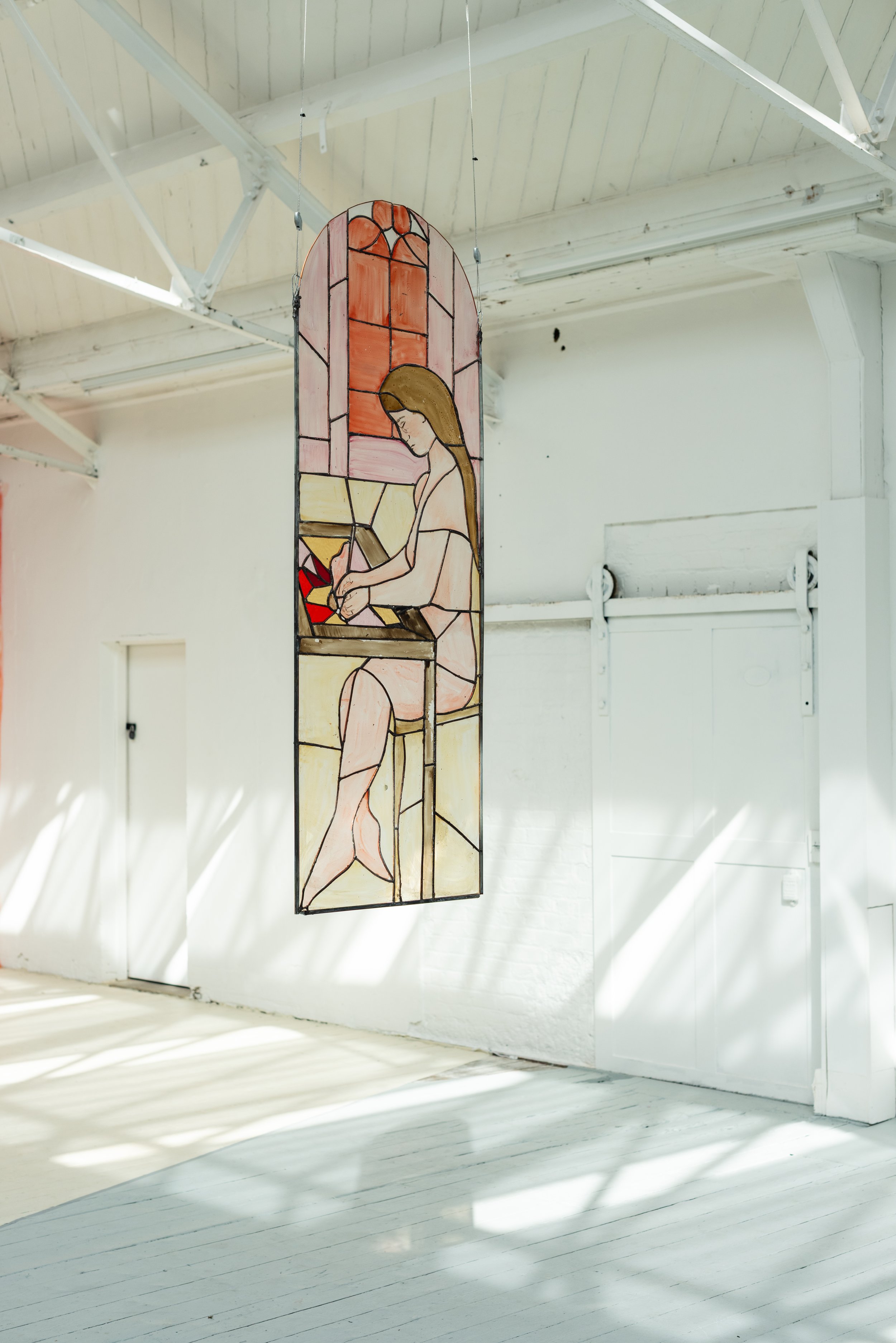
Ascension Day consists of six stained glass panels suspended throughout the exhibition space, drawing on themes of spiritual ascent, transformation and redemption. The project emerges directly from my recent body of work, Lovesick, which explored medieval ideas of rapture and the spiritual exercises undertaken by pilgrims in pursuit of union with the divine. The starting point for this new work was a painted text panel excavated from the abandoned and broken stained glass window within the residency space, a fragment that became both a symbolic and material catalyst for the project.
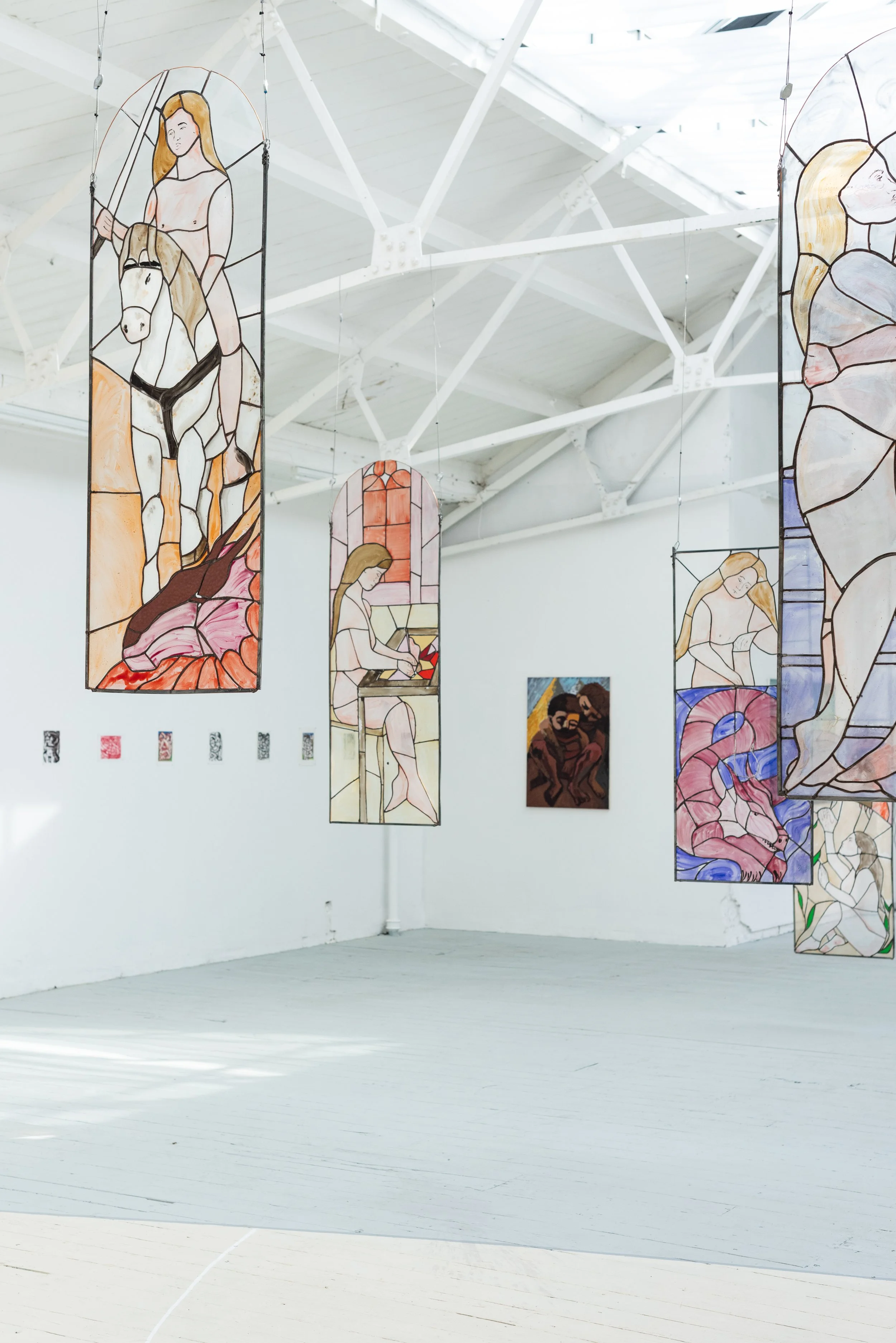
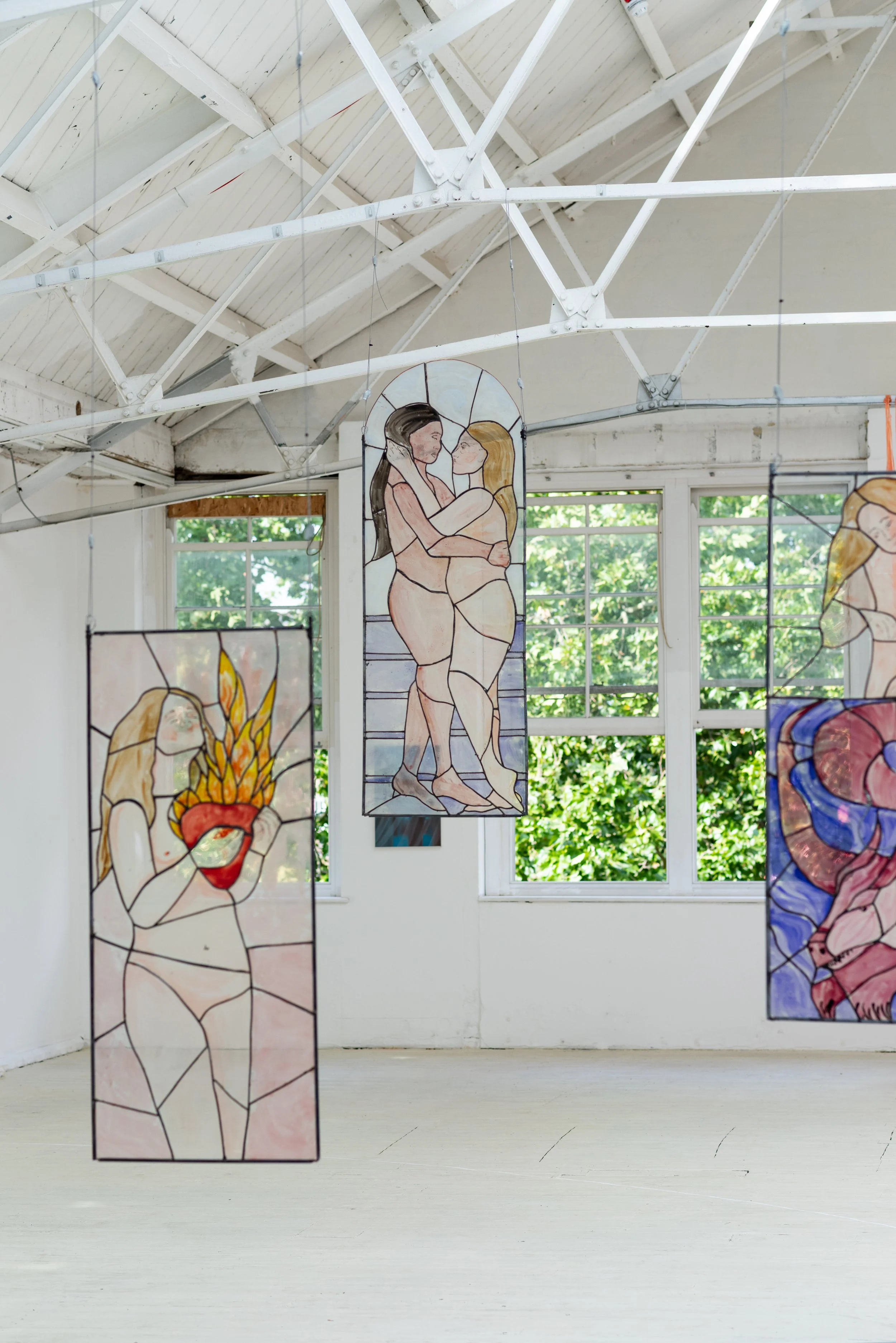
The installation takes its physical structure from the footprint of one of the stained glass windows upstairs at Christchurch, specifically the window depicting female saints, whose coloured reflections fall across the white gallery walls each afternoon. Ascension Day reimagines this encounter with stained glass by dispersing the panels throughout the space, allowing them to physically ascend as the viewer moves through the installation. Suspended incrementally higher from the ceiling beams by wire, the panels invite an embodied and interactive experience that contrasts with the fixed, architectural position stained glass traditionally occupies within churches.
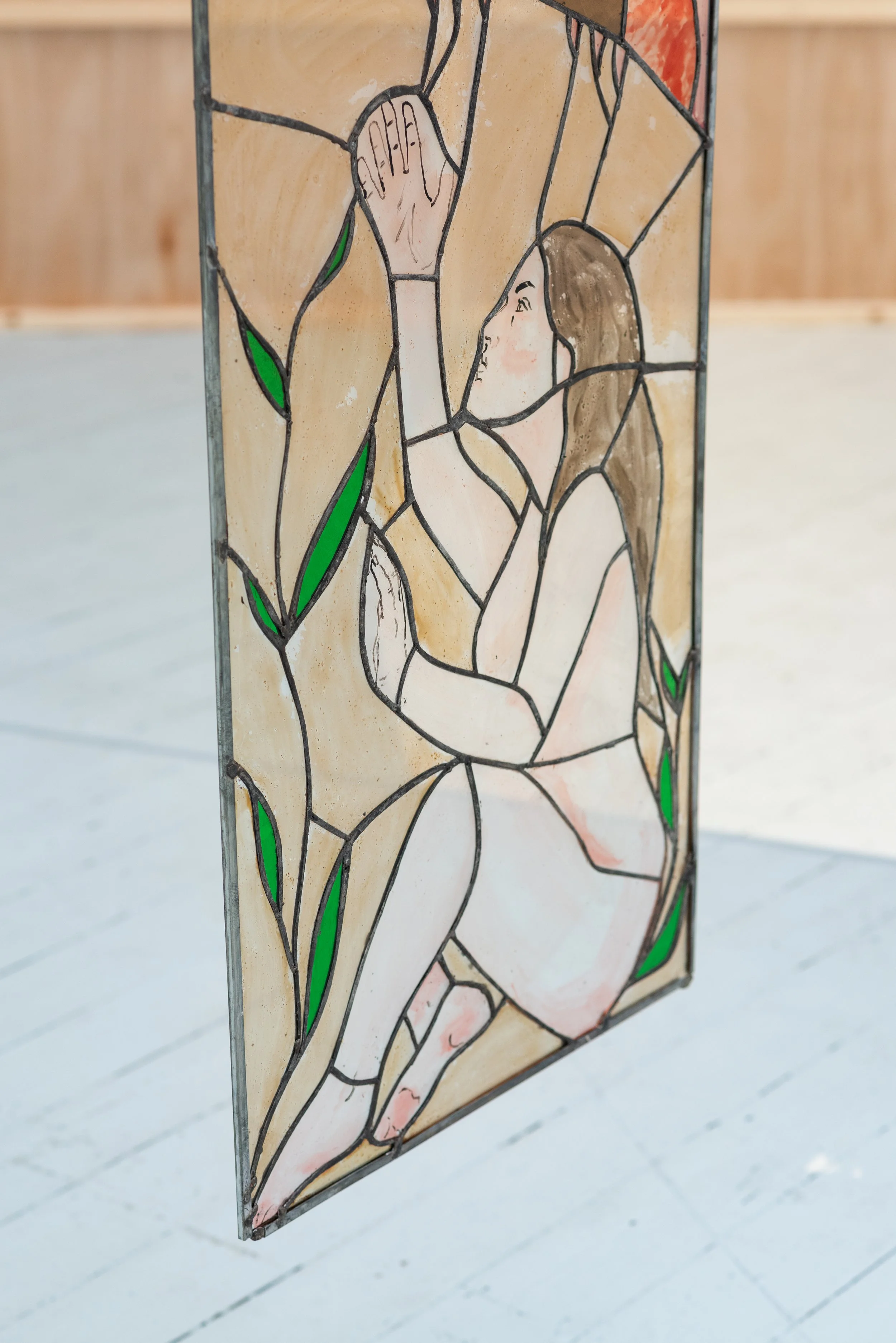
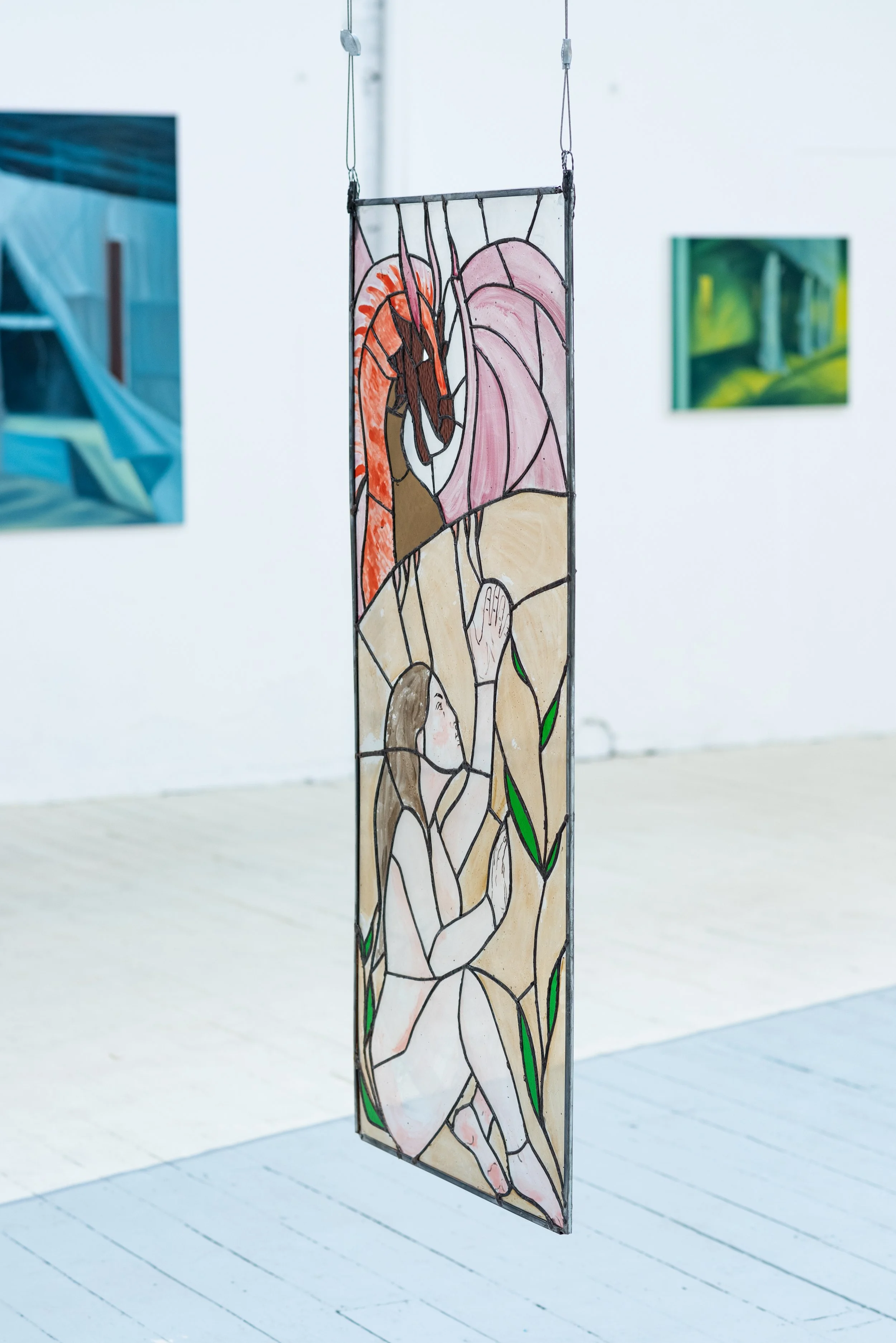
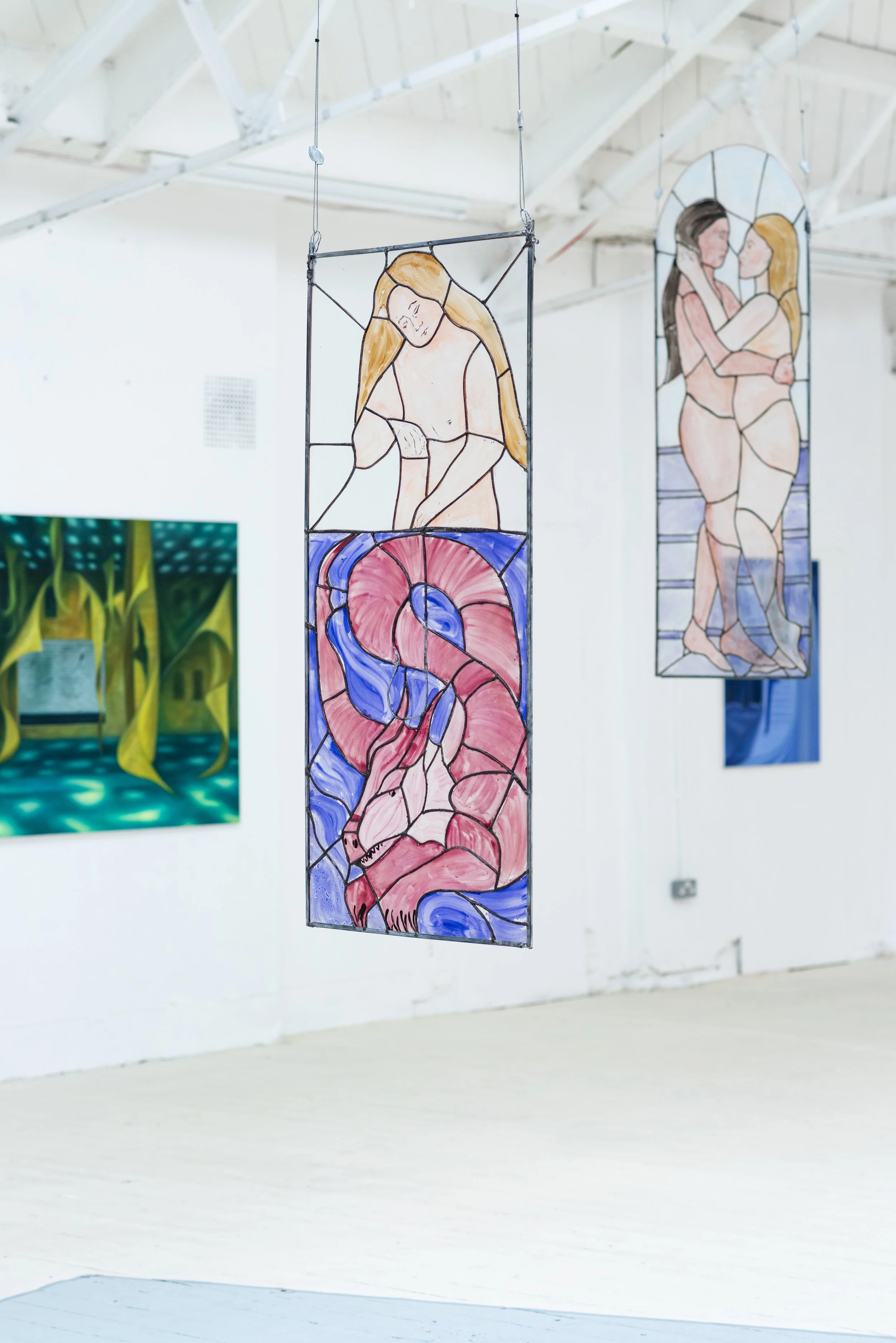
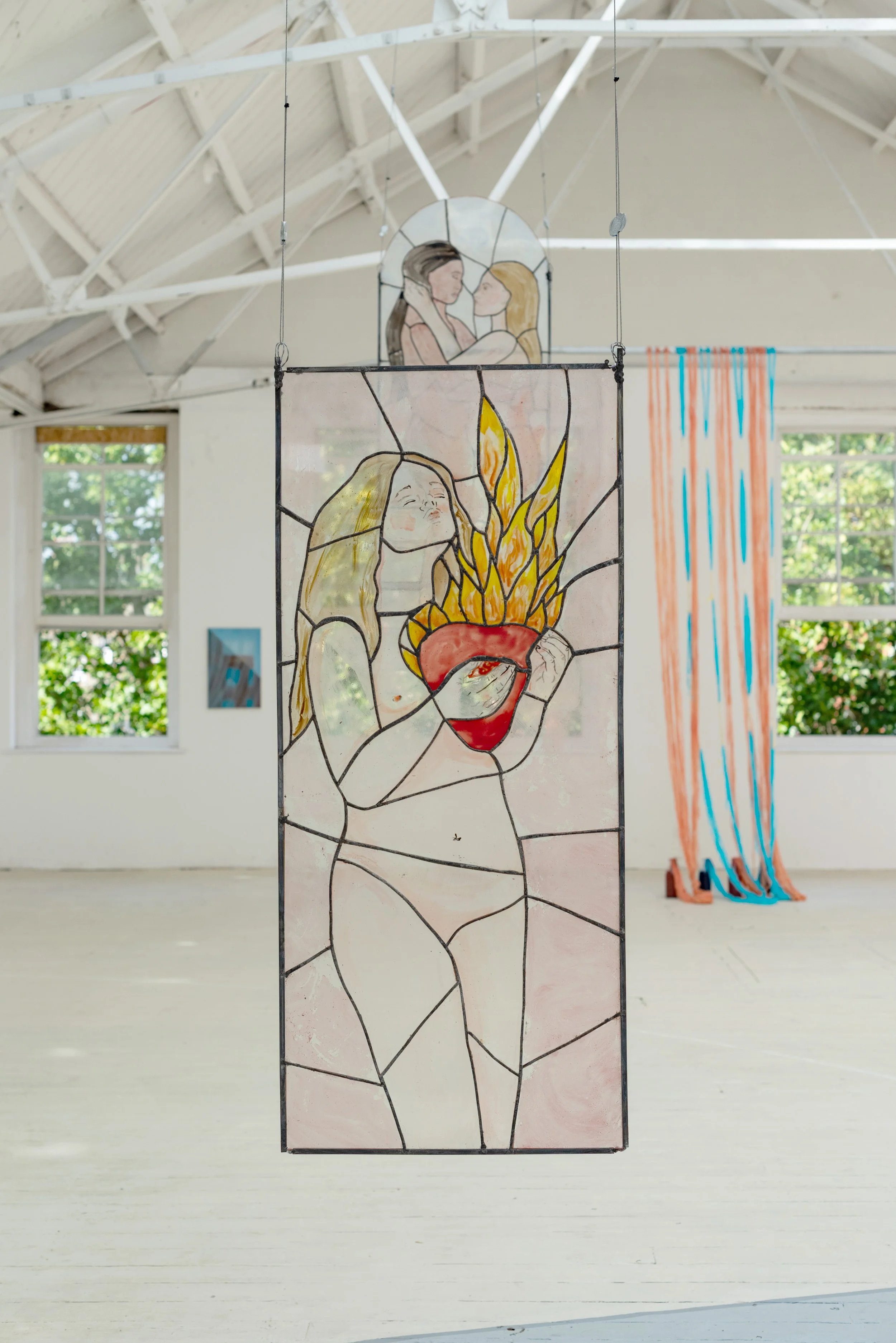
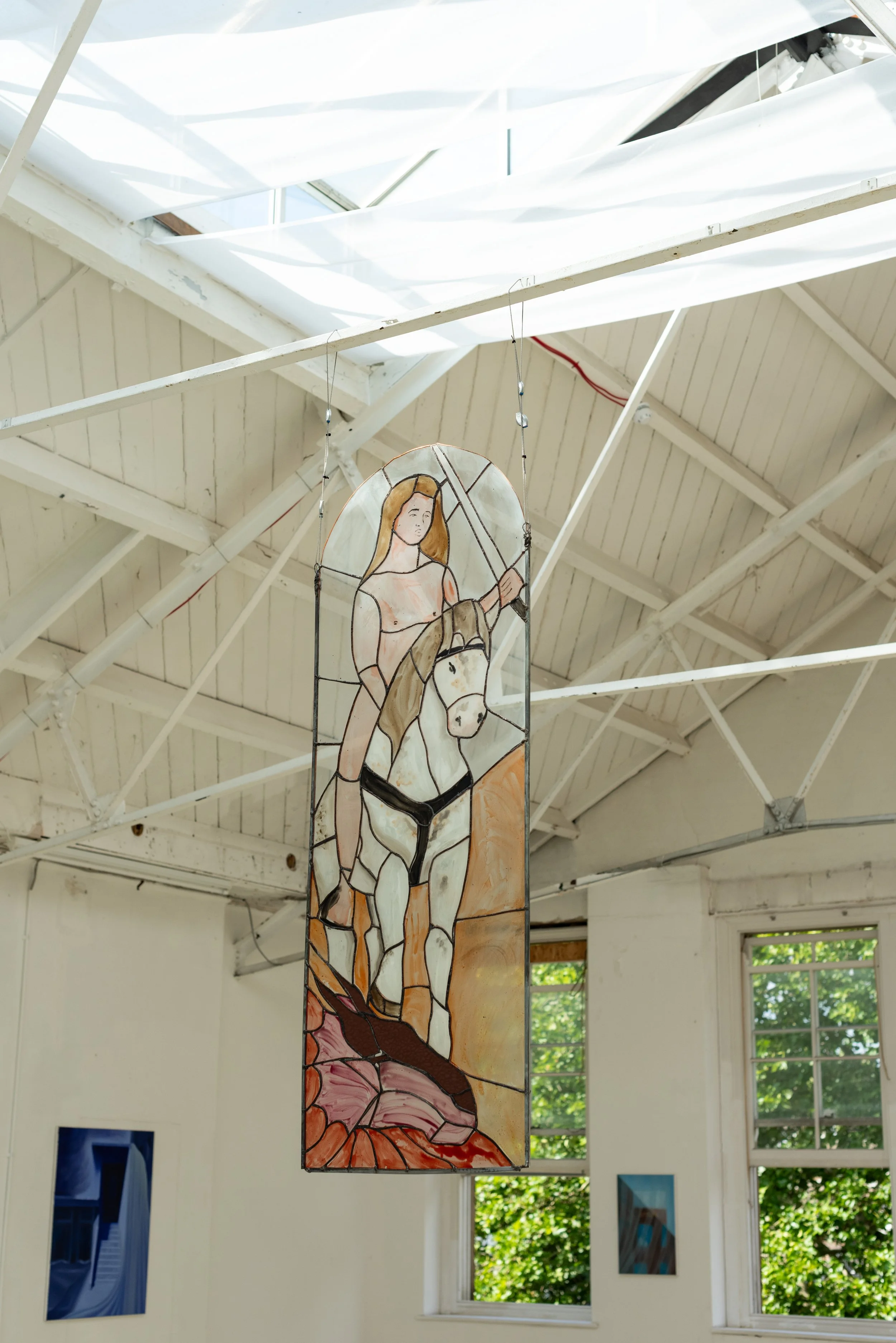
Structured in the manner of a traditional judgement image, the lower three panels depict states of suffering and entrapment. These “hell panels” portray women caught within mythological and emotional forms of oppression: a figure constrained beneath an overbearing dragon, a saintly woman with her heart extracted, and another searching beneath the sea for a lost sense of self. The recurring dragon motif references original drawings of Saint George, discovered within the residency space, extending the symbolism of divine triumph over evil into narratives centred on contemporary women.
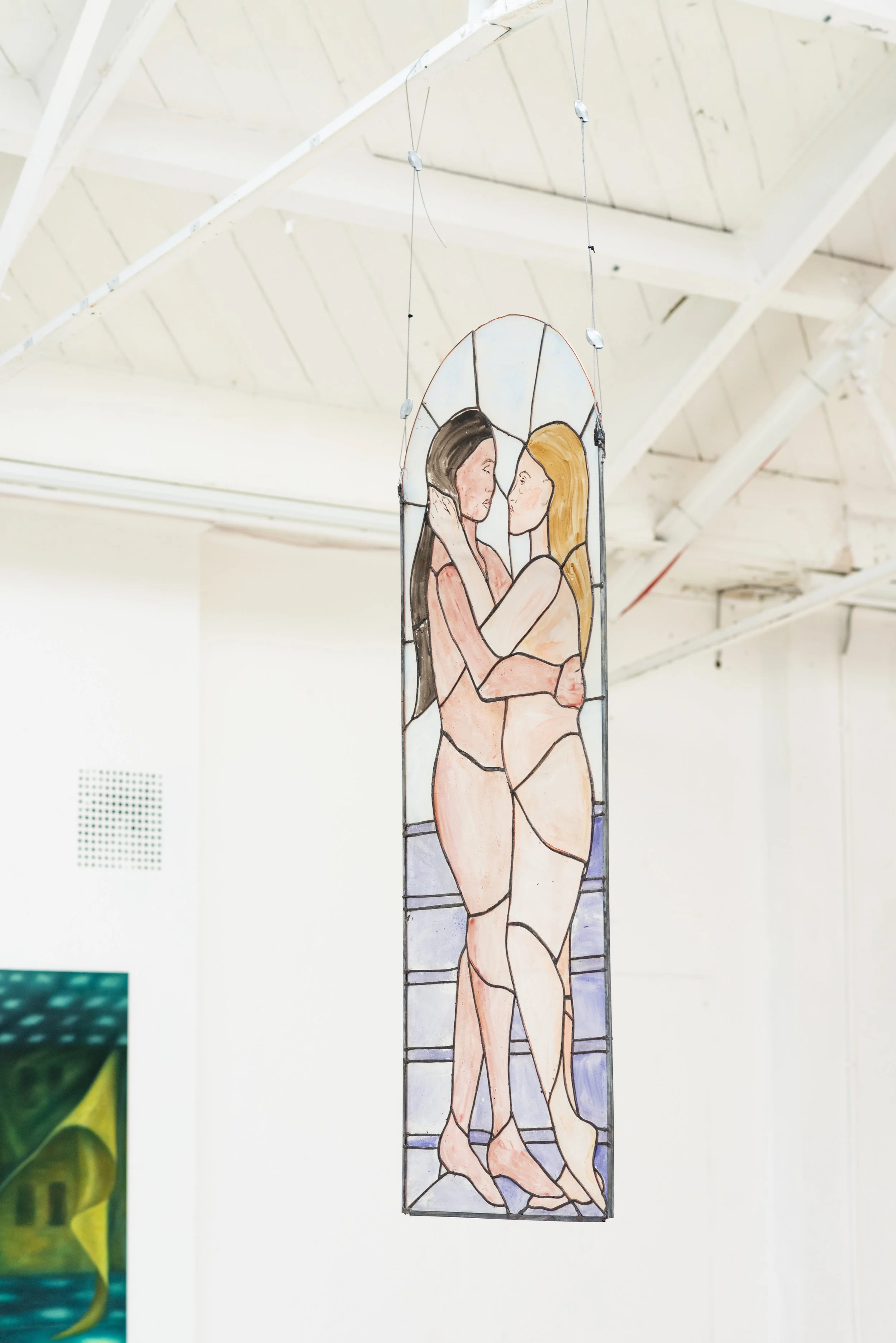
As the viewer progresses upward through the installation, the panels shift toward salvation and release. The upper works depict lovers reunited, alongside scenes of creativity and courage, culminating with the dragon defeated. The work is intended to function as a contemplative journey, guiding the viewer through stages of emotional and spiritual transformation toward a divine outcome. By physically moving through the ascending installation, the audience becomes participant and pilgrim as well as observer, encountering the work through both bodily movement and reflection, much like the experience of entering a church or engaging in prayer.